
Making Momentum CIC Cleaning Procedures
At Making Momentum we understand stables, equipment and horses require a cleaning procedure to maintain a healthy environment for horses, prevent the spread of diseases, and ensure the well-being of the animals and staff. The aim of this procedure is to ensure the following;
A clean environment
Health and Hygiene:
Regular cleaning removes manure, urine, and contaminated bedding, which can harbor pathogens and parasites that cause diseases.
Disease Prevention:
A clean stable reduces the risk of disease outbreaks and helps prevent the spread of infections among horses.
Animal Welfare:
A clean and well-maintained stable provides a comfortable and safe environment for horses to rest and spend time in.
Odour Control:
Regular cleaning helps to eliminate unpleasant odors that can arise from the accumulation of waste.
Insects and Pests:
A clean stable reduces the attraction of insects and pests, which can be a nuisance for both horses and stable owners.
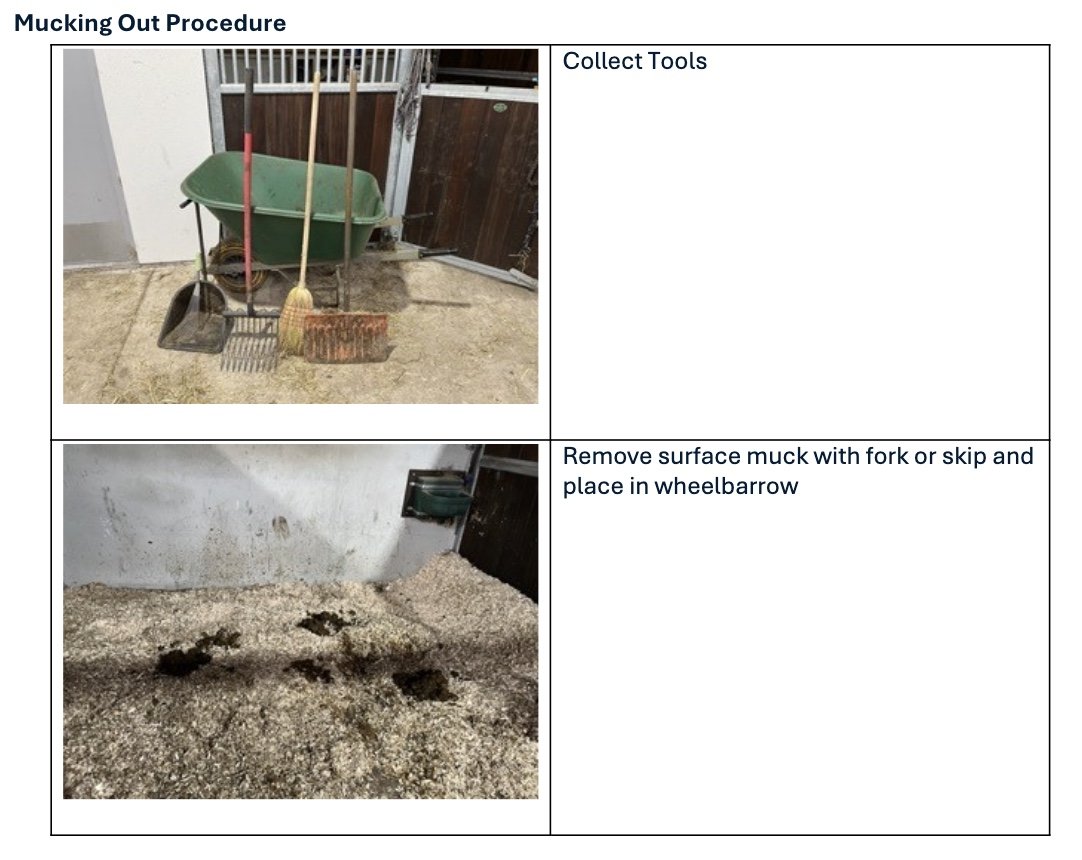
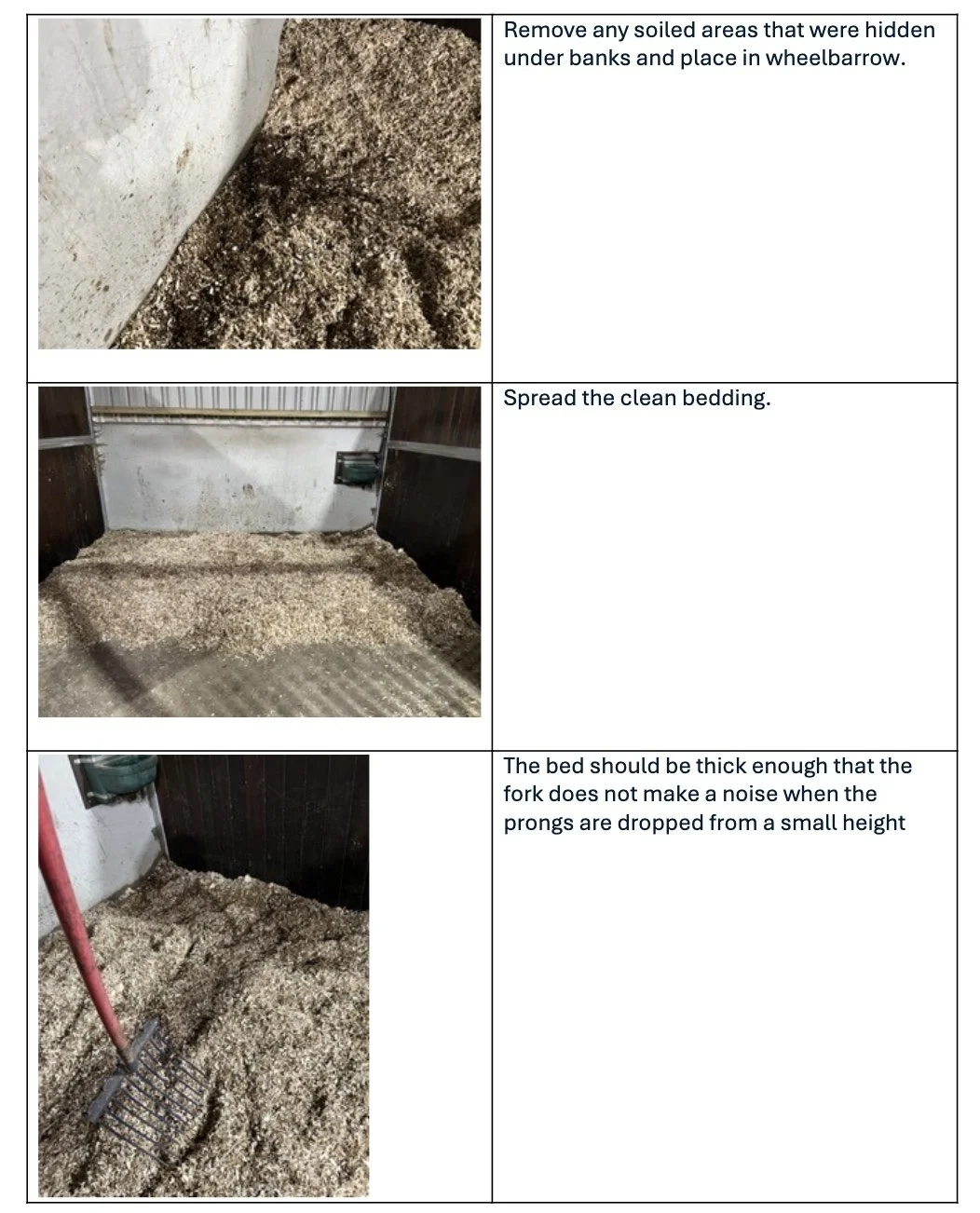
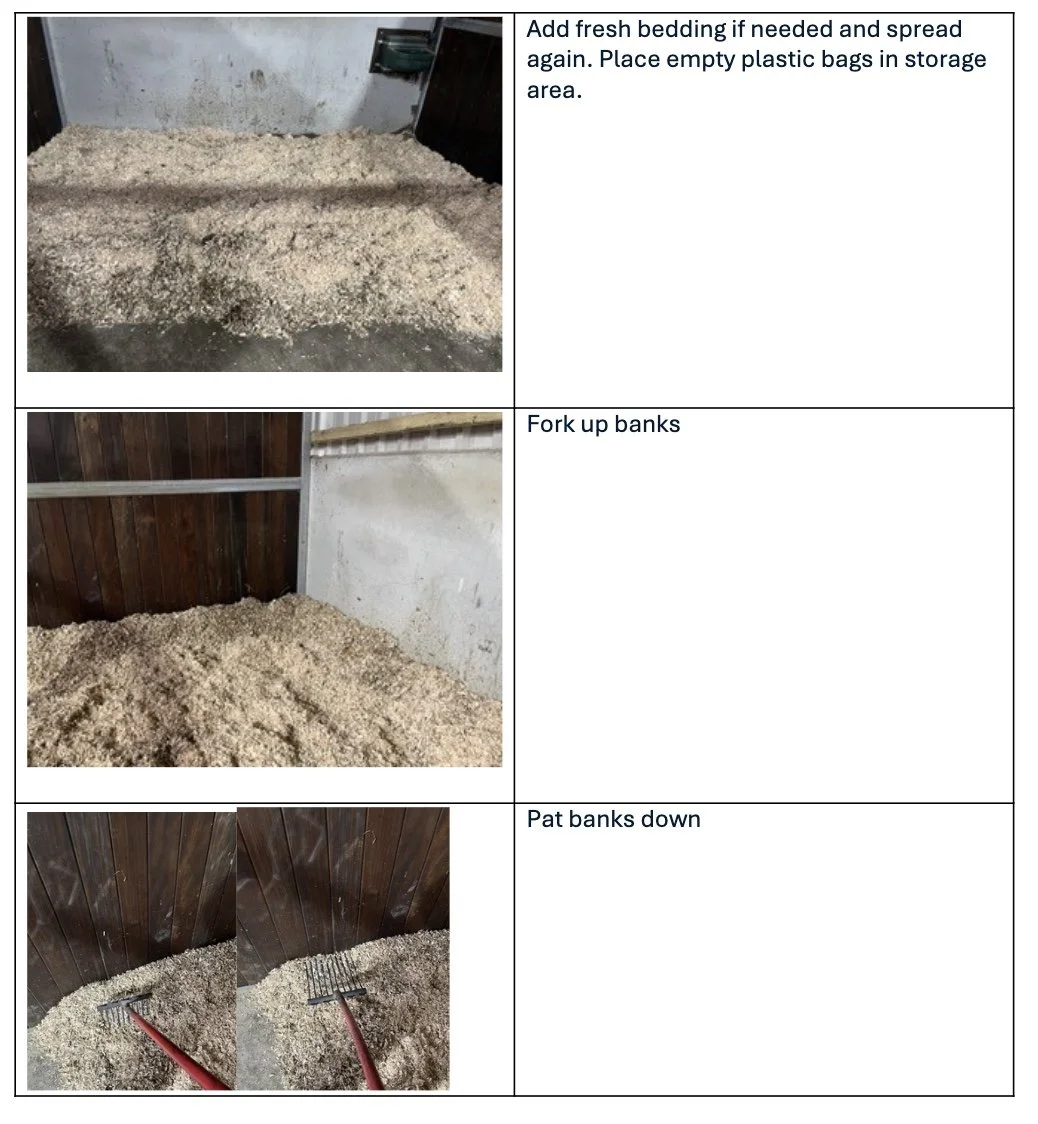
Mucking out:
Mucking out involves removing all wet bedding and droppings and replacing it with fresh bedding
Clean Tack
Preventing Leather Damage:
Dirt, sweat, and grime can damage leather over time, leading to cracking, dryness, and deterioration of the tack.
Maintaining Comfort:
Cleaning tack ensures that the horse and rider are comfortable during rides. Dirty tack can cause rubs, sores, and discomfort where it meets the horse's skin.
Safety Checks:
Regular cleaning provides an opportunity to thoroughly inspect the tack for any signs of wear, damage, or loose stitching, which could compromise safety during a ride.
Hygiene:
Cleaning tack helps to remove sweat, bacteria, and other contaminants that can build up and cause skin irritations or health issues for the horse.
Appearance:
While not the primary reason, clean tack also looks better and can be a point of pride for riders and create a good professional impression for clients.
Extend Life:
Regular cleaning and maintenance can extend the lifespan of your tack.
Clean Horses
Health and Hygiene:
Prevents skin problems: Grooming removes dirt, dust, and dead hair, which can prevent skin conditions like thrush, scratches, and rain rot.
Stimulates circulation: Brushing and currying stimulate blood flow to the skin, promoting healthy skin and coat.
Reduces chafing: Grooming ensures the horse's coat is clean, reducing the risk of chafing or sores under tack.
Early detection of health issues: Grooming provides an opportunity to check for cuts, swelling, heat, lameness, or changes in temperament, which could indicate illness or injury.
Appearance:
Enhances coat: Grooming helps to remove dirt and debris, revealing the horse's natural coat sheen.
Improves overall look: A well-groomed horse looks and feels healthier and more presentable.
Bonding and Handling:
Strengthens the relationship: Grooming is a bonding experience that can help create a positive relationship between horse and handler.
Facilitates handling: A well-groomed horse is more comfortable to handle and ride.
Other Benefits:
Removes sweat and debris: Grooming after a ride helps to remove sweat and debris, which can cause discomfort and skin problems.
Massage: Grooming can act as a massage, which can help to relax muscles and improve circulation.
Natural behavior: Horses naturally groom each other in a herd, and grooming can be a way to provide this social interaction for stabled horses
Daily Cleanliness Tasks
Mucking Out
Checking Waterers for soiling
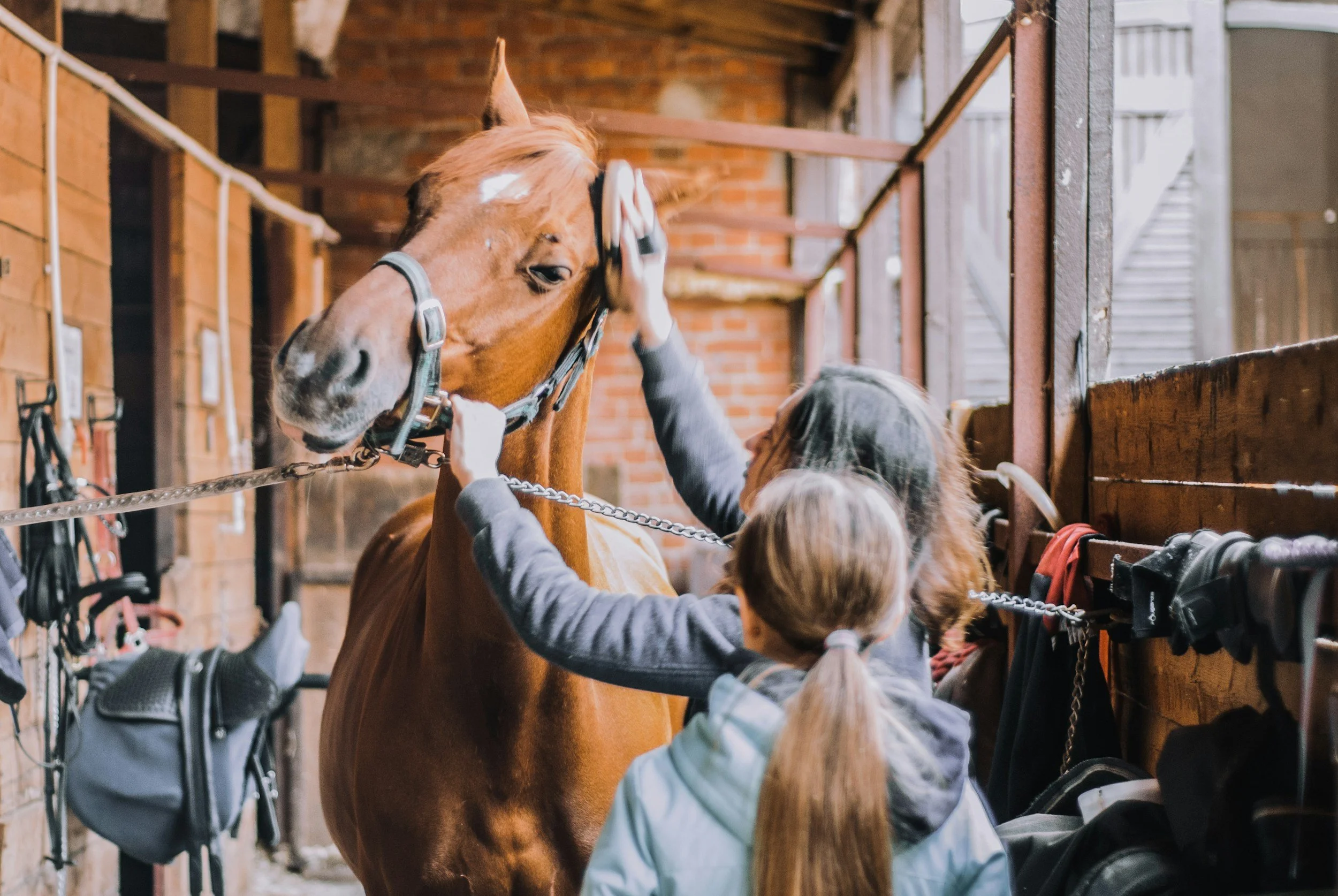
Grooming horse before and after work
Perfunctory groom of horses not in work
Scrubbing feed buckets
Sweep feed room
Clean tack that has been in use
Sweep and tidy aisle and work areas
Check and clean toilets and handwash facilities
Weekly Cleanliness Tasks
Groom horses not in work thoroughly
Empty and clean stable waterers
Empty and clean feed bins when new feeds are introduced
Wash tails and legs, apply pig oil in winter
Apply hoof treatments
Harrow arena
Walk fields and litter pick/weed
Deep Clean toilets
Change towels
Change used numnahs and saddle cloths
Dispose of rubbish
Monthly Cleanliness Tasks
Clean Storage areas
Move and clean behind feed bins
Weed arena
Tidy feed and haylage store
Clean field waterers
Seasonal Cleanliness Tasks
Rugs for mending, laundry and reproofing
Empty and disinfect stables
Sanitise grooming kits
Bath horses during warm weather
Sort, clean and tidy storage areas
Tasks will be assigned by directors in line with team capacity and workload

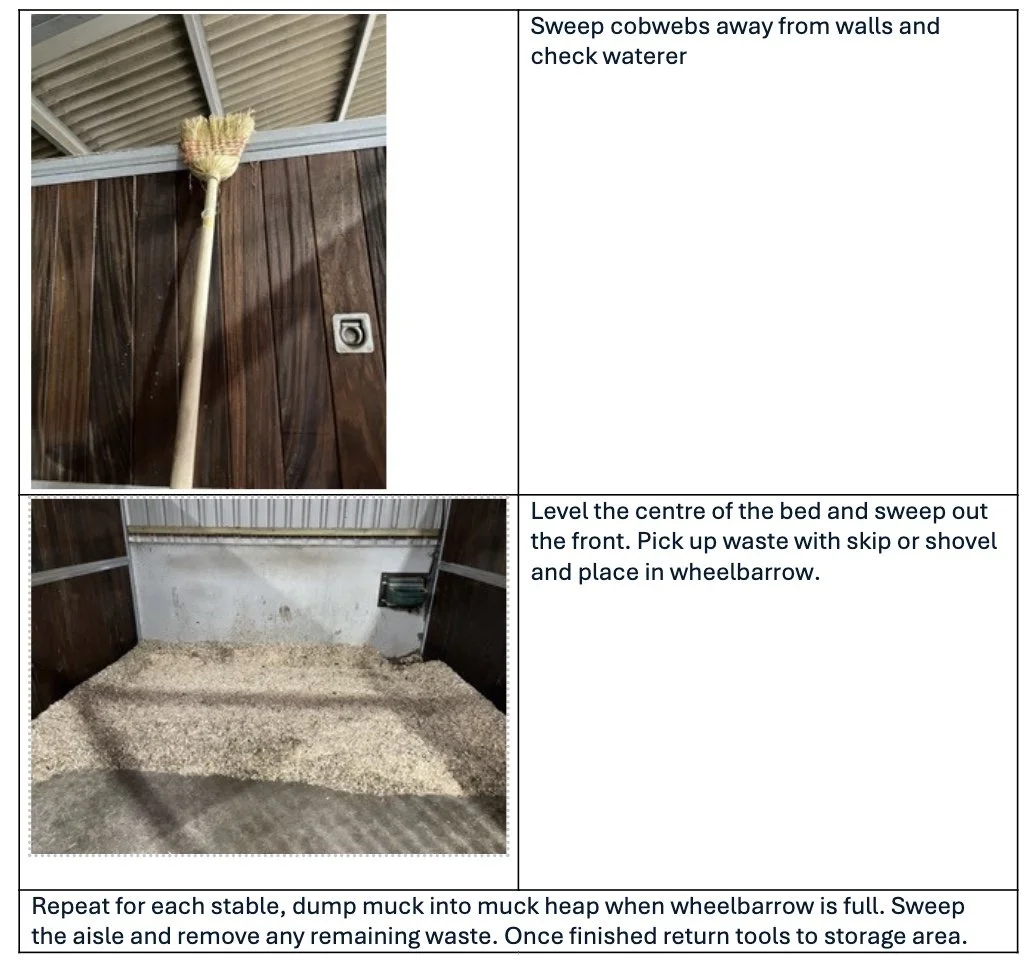
GROOMING PROCEDURE:
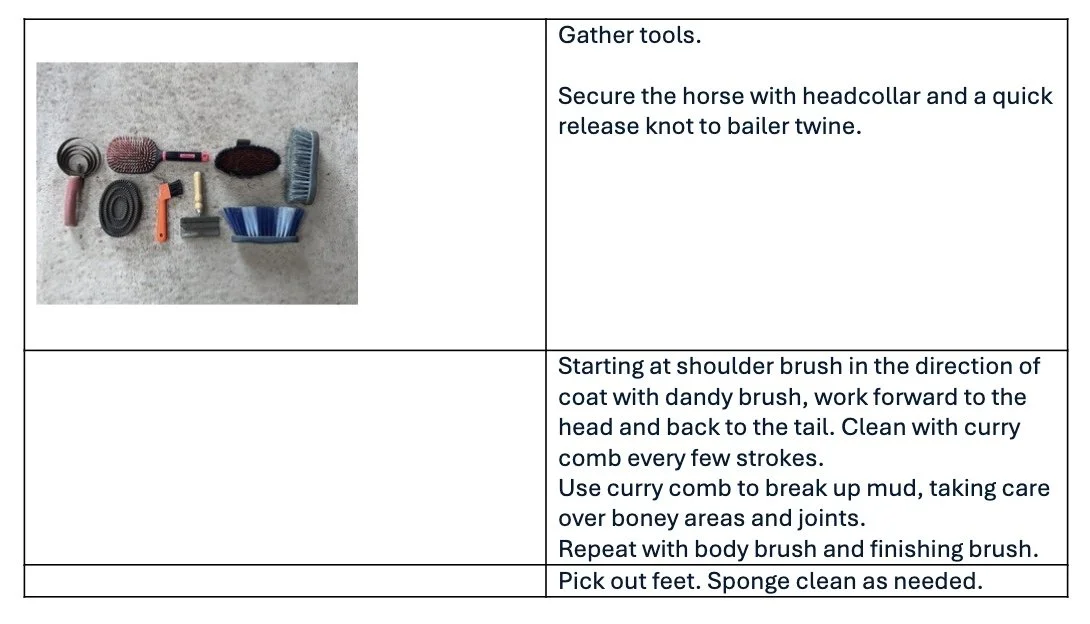
BATHING PROCEDURE:
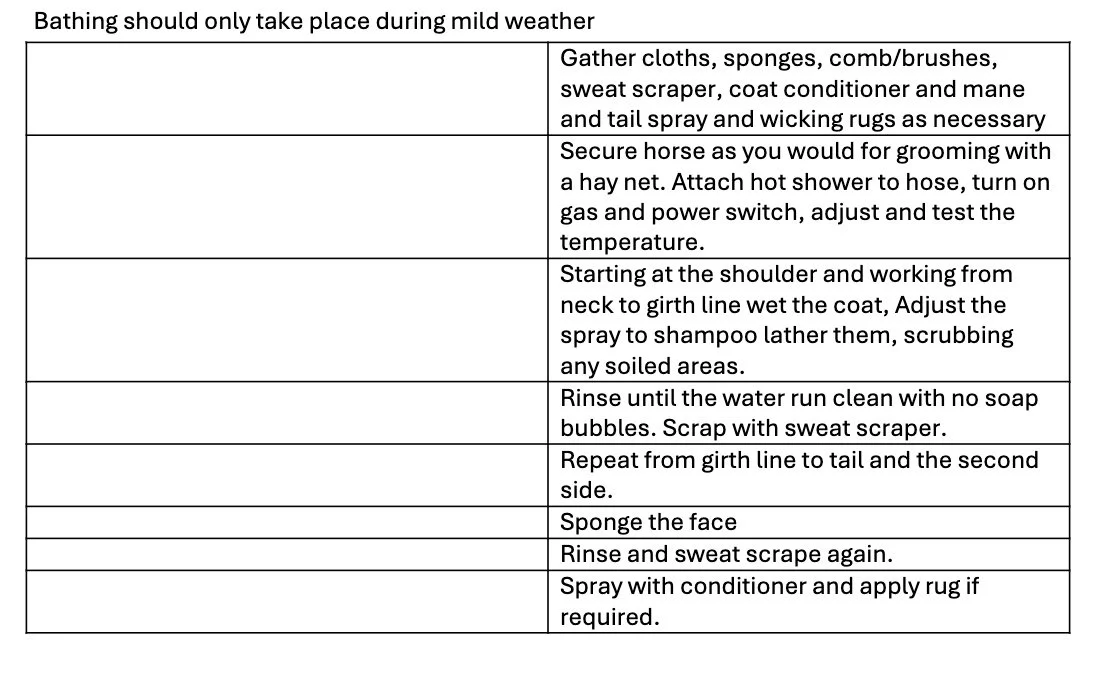
WASHING TAILS AND LEGS:
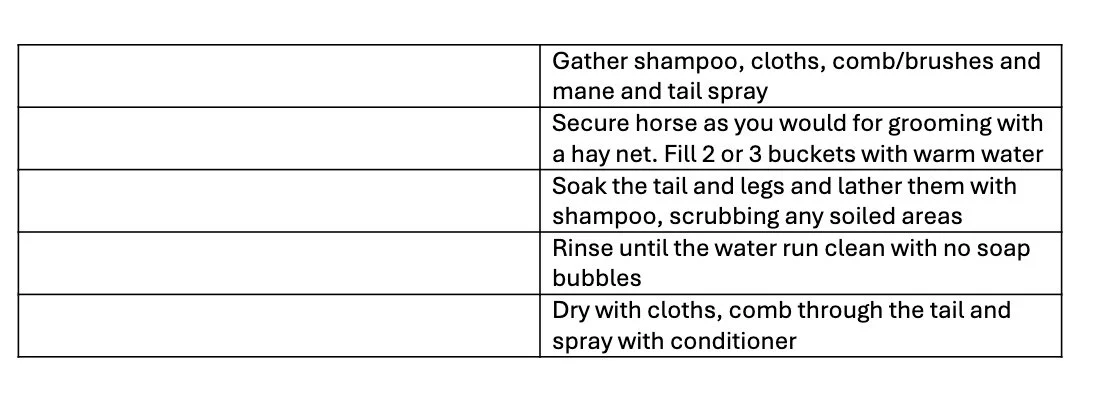
Tack Cleaning Procedure:
Tack which has been used will be spot cleaned daily.
Hang bridles and accessories to be cleaned on cleaning hooks
Place saddles on saddle rack
Spray tack cleaner onto a sponge and wipe all leatherwork
Check for signs of wear while cleaning and report by taking a photo and sending to Staff WhatsApp group
Repeat with tack conditioner
Return tack to the tack room
All tack will be deep cleaned bimonthly
Unfasten keepers to be able to access all leather work
Wet a sponge and wipe over solid saddle soap
Wipe over all leather work
Undo and refasten buckles as you go
Carefully check for signs of wear or damage and report by taking a photo and sending to Staff WhatsApp group
Brush any synthetic or suede areas
Brush neatsfoot oil any leatherwork which appears dry on its raw side
Polish with a clean dry cloth
Return tack to tack room