Making Momentum CIC Feeding Procedure
At Making Momentum we recognise that an appropriate feeding regime is essential to horses' wellbeing and health. The horse is predominantly a grazing animal, designed to eat small amounts, frequently. Their natural feed is grasses and other edible shrubs and plants. They have evolved to eat forage-based diets for approximately 16-18 hours a day. Stabled horses need the opportunity to mimic natural behaviours as far as possible to maintain their physical health and wellbeing and prevent issues such as being under or overweight, gastric ulcers, boredom and frustration. The principles of good feeding are;
High Forage Diet: Horses should primarily be fed good quality forage (hay or grass).
Feed Little and Often: Mimic natural grazing patterns by offering small, frequent meals rather than large, infrequent ones.
Gradual Changes: Introduce new feeds or changes to the diet gradually, ideally over 10-14 days, to minimize the risk of digestive upset like colic.
Consistent Routine: Maintain a consistent feeding schedule to help your horse's digestive system function optimally.
Cleanliness: Practice good hygiene by regularly cleaning feed buckets and stirrers.
Water: Ensure a constant supply of fresh, clean water.
Store Feed Properly: Store feed in a clean, dry area to prevent spoilage and maintain quality.
Feed According to Bodyweight and Workload: Adjust the amount and type of feed based on your horse's individual needs
The aim of this procedure is to ensure that feeding of our equine partners meets their needs appropriately.
Water and Feed Intake
Horses should consume 2-2.5% of their body mass daily as dry matter forage and drink between 25 and 55 liters of water. Water is provided in stables and fields by automatic waterers (Trugs in Track Paddock). These should be checked daily and regularly cleaned.
If any horse appears to have refused food or water, immediately notify the most senior member of staff.
Cleanliness
Feed buckets should be scrubbed after each use and stored in feed room.
Feeds to be stored in bags in labelled feed bins in Feed Room. Feed stock is stored in barn in waterproof containers.
Feed area to be swept daily and notice taken of any signs of rodents. A thoroughly cleaning including the moving and clearing of bins to take place on the last weekend of every month.
Feeds and Haylage to be visually inspected upon opening for signs of mould or spoiling.
See Cleaning Procedure for further details.
Winter Feeding
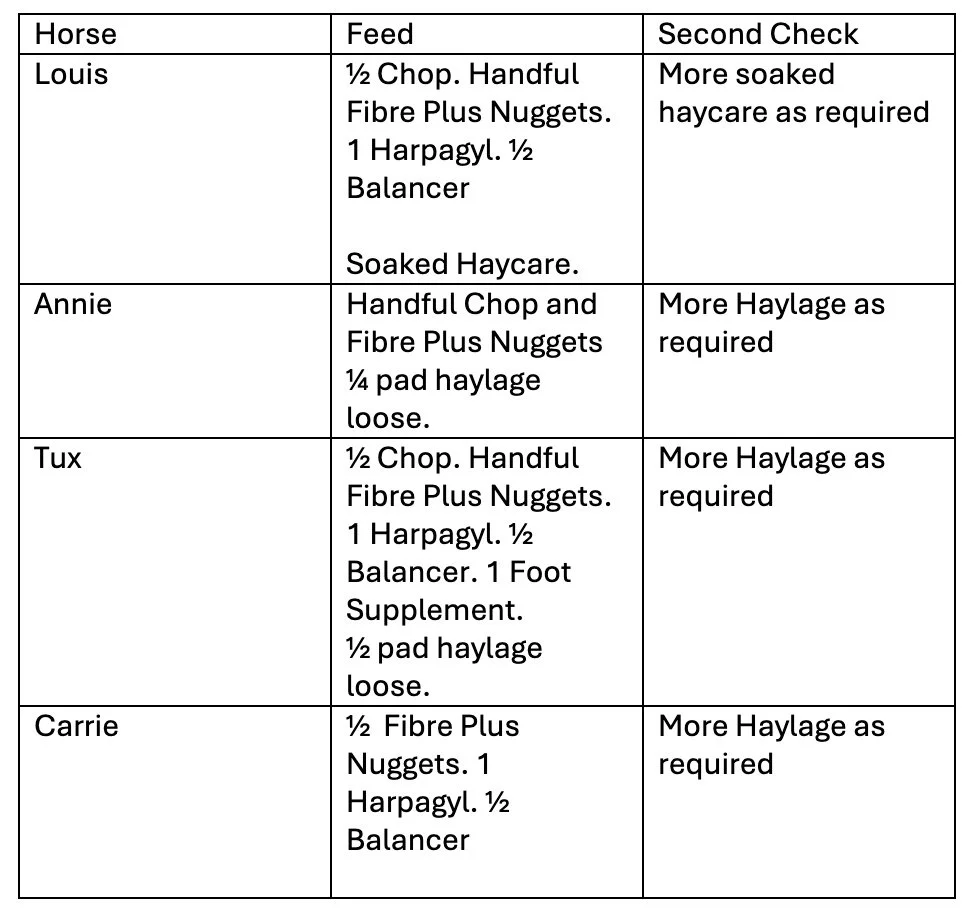
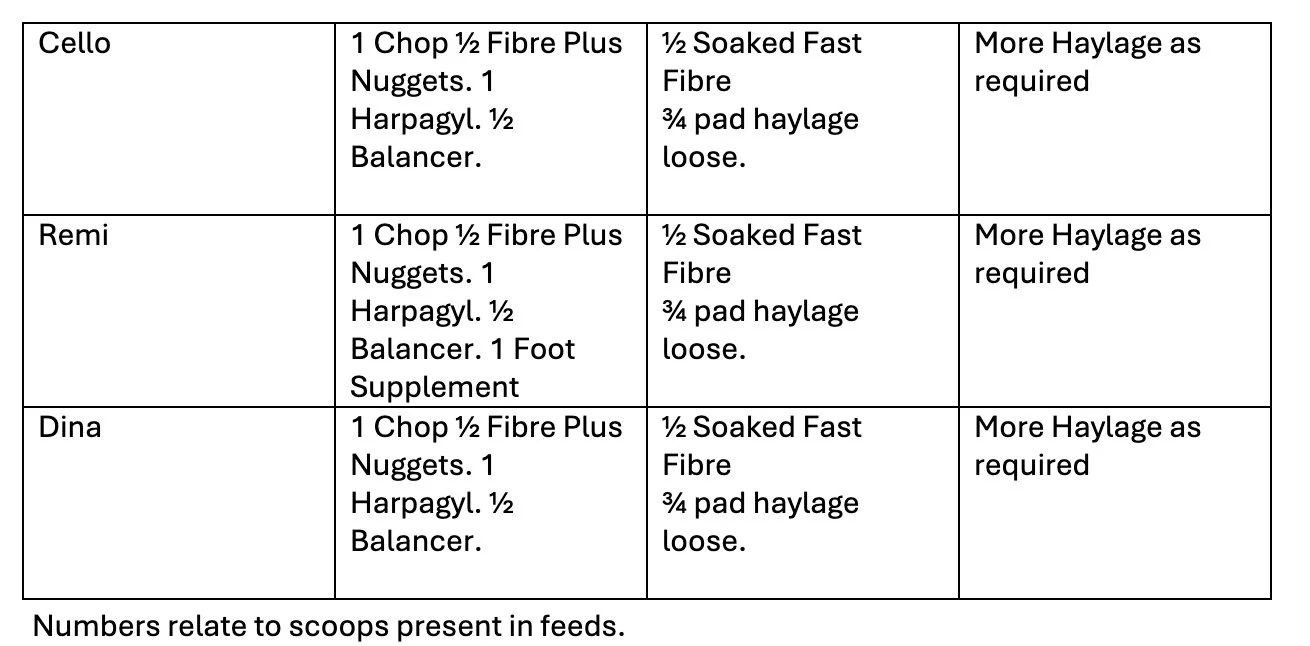
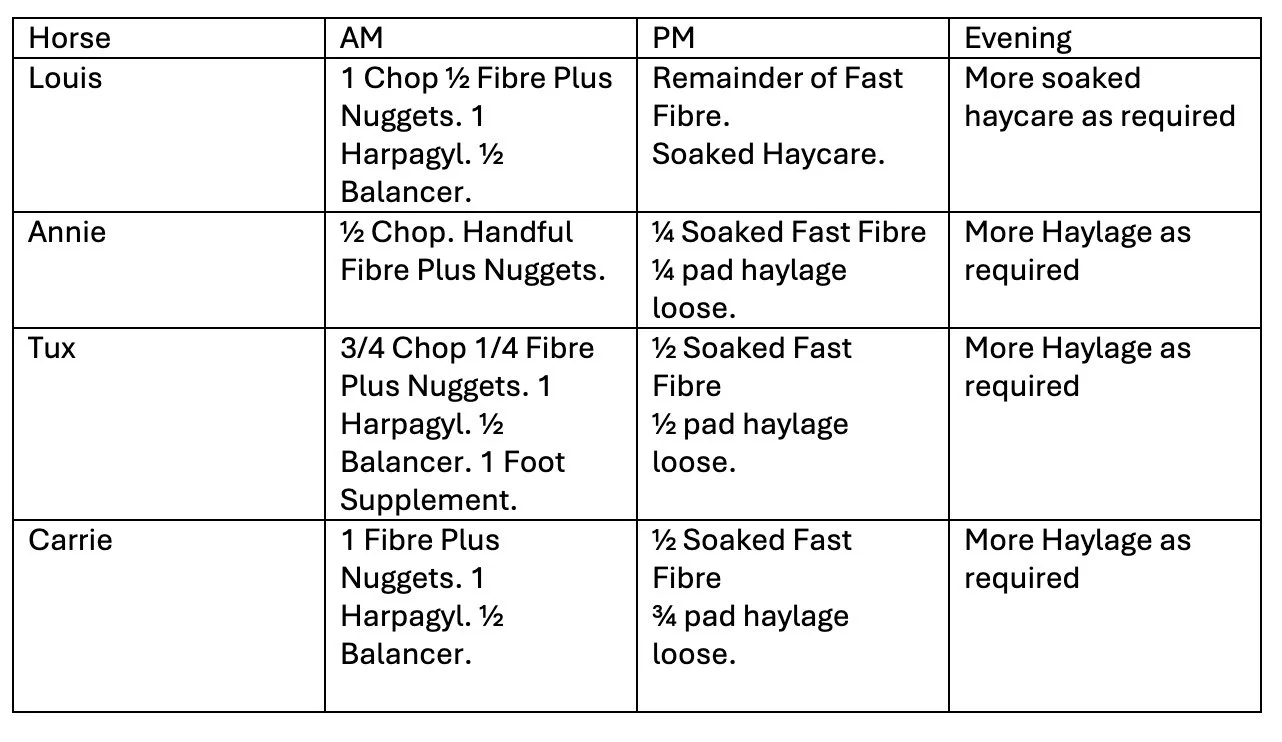
AM. Soak 2 scoops Conditioning Mash with 2 scoops water if present on feed chart.
PM. Soak 4 scoops Fast Fibre with 8 scoops water in large trug. Soak 6 Scoops Haycare with 15 scoops water in extra-large trug.
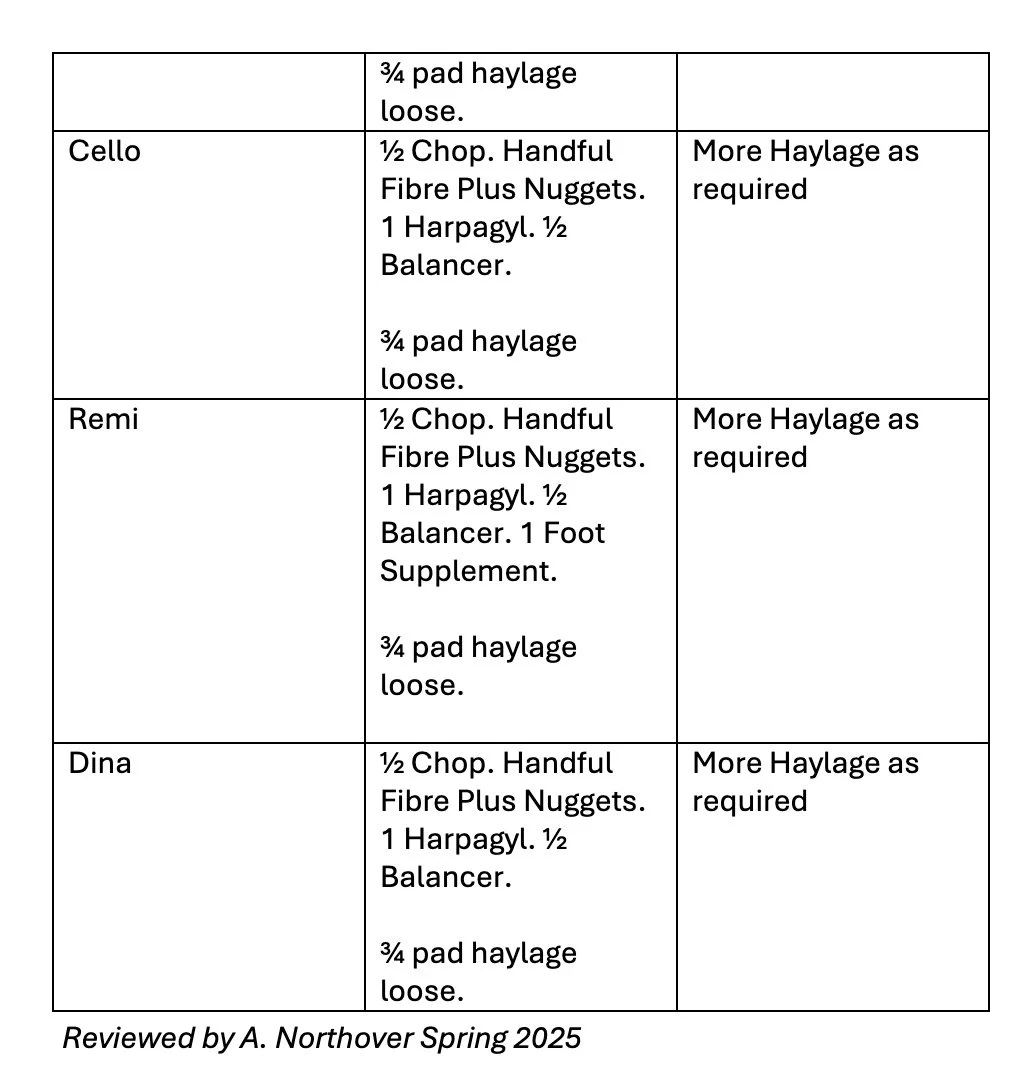
WINTER FEEDING:
SUMMER FEEDING: Horse may be fed AM or PM dependent on turn out regime and weather.